


Participated in public demo 2606 4W with Codes Compliance Assistant
July 17, 2026
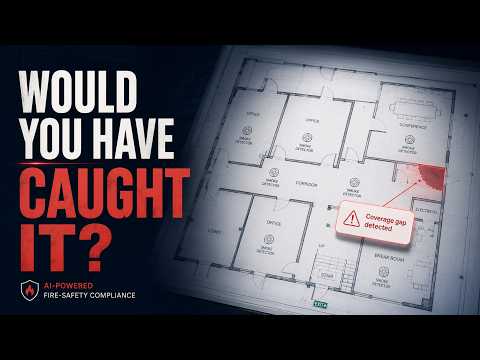
The problem [00:00:15] Dan understood the problem from working inside fire safety engineering himself: fire-alarm plans are checked by hand, room by room and sheet by sheet, a slow, expert-only process where the failures that matter aren't the mistakes reviewers catch but the ones they miss, and those slip-ups, once built, run 5–15% of a project's value across a multi-trillion-dollar construction industry. What they built [00:01:48] He built the Codes Compliance Assistant, a first-pass reviewer prototype that reads a fire-alarm drawing, segments the architecture into rooms, and identifies fire-safety devices against the sheet's own legend, then runs compliance checks, coverage, spacing, and manual-station travel distance, and writes a traceable, plan-linked report. Under the hood it splits the task three ways: computer vision locates devices, a vision-language model classifies each symbol against the sheet's own legend, and geometry determines which room each device sits in, keeping probabilistic interpretation and deterministic spatial rules separate so the output stays auditable rather than a black-box stamp of approval. What happened [00:03:53] In a planted-defect test, the assistant correctly flagged all three missing detectors as non-compliant rooms with plan-linked evidence. Shown to a code reviewer, a technical specialist, and a CFD specialist, the reaction was that they'd use it on every project because the errors were easy to see at a glance, though Dan is explicit these are early, scoped results, not a production claim. The ask [00:04:51] Dan is looking for design partners, architecture firms and fire consultancies who can share real drawings and put an engineer's eye on the output, as well as investors to help turn the working prototype into a tool the industry can rely on.
Watch the video